
Gel packs combined with insulated containers can replace dry ice for any perishable food that needs to stay refrigerated (32–40°F) during transit. They're cheaper, require no hazmat labeling, and eliminate the regulatory burden that comes with shipping a Class 9 hazardous material. But for truly frozen products that must stay at or below 0°F, dry ice is still the only viable option for parcel shipping.
This guide breaks down exactly when you can drop dry ice, what to replace it with, and the cost math behind making the switch.
Last updated: April 2026
Why Consider Alternatives to Dry Ice?
Dry ice works. It keeps products frozen at -109.3°F (-78.5°C) and sublimates cleanly — no messy liquid to deal with. But it comes with three problems that scale poorly as your shipping volume grows:
1. Cost
Dry ice runs $1.00–$1.25 per pound from industrial suppliers at volume, and it's a single-use expense — it sublimates completely in transit. A typical overnight shipment (12×12×12 box, 30 lbs pre-frozen) needs 3–4 lbs of dry ice. A 2-day shipment needs about 5.5 lbs. At 100 shipments per week, you're spending $350–$700 per week on a consumable that disappears before the customer opens the box.
2. Regulatory Burden
Dry ice is classified as a Class 9 hazardous material by the DOT under 49 CFR 173.217 [1]. Every package requires a UN 1845 label with the net weight in kilograms, plus shipper and recipient contact information. International shipments add IATA Packing Instruction 954 compliance [2]. Miss any of this and your carrier can refuse the package, delay it, or flag your account for compliance review.
3. Safety and Handling
Dry ice causes burns on skin contact and produces CO₂ gas as it sublimates. It requires proper ventilation during storage and handling, staff training, and careful packaging to prevent pressure buildup in sealed containers. None of this is insurmountable, but it adds overhead to every shift in your fulfillment operation.
If your products need to stay refrigerated (not frozen), all three of these problems disappear when you switch to gel packs.
Gel Packs: The Primary Dry Ice Alternative
Gel packs are sealed pouches filled with a water-based gel that absorbs and releases cold energy over an extended period. When frozen, they maintain refrigerated temperatures (32–40°F) for 24–48 hours in a standard insulated container — long enough for overnight and most 2-day shipments.
How Gel Packs Work
Unlike dry ice, which sublimates at a fixed temperature (-109.3°F), gel packs provide a gradual, controlled cooling effect. They absorb ambient heat slowly, maintaining a consistent cold environment without the extreme temperature swings that dry ice can cause. This is actually better for many food products — dry ice can cause freezer burn on fresh items, while gel packs maintain a gentle, steady chill.
Types of Gel Packs
- Standard water-based: The most common and affordable option. Freeze them, pack them, ship them. $0.50–$1.50 each depending on size and volume pricing.
- Phase-change materials (PCMs): Engineered to maintain a specific temperature range (e.g., 33–39°F) for longer durations. More expensive ($2–$5 each) but provide tighter temperature control for sensitive products like raw seafood or dairy.
- Biodegradable/organic: For brands with sustainability commitments. Made from plant-based gels in compostable packaging. Slightly higher cost but appealing to eco-conscious customers.
Sourcing Gel Packs
Don't use random gel packs from a retail store. Source from cold chain packaging suppliers who can provide consistent quality, specific sizes for your packaging, and bulk pricing. Request samples and test them with your actual products and insulated containers before committing to a bulk order. Ask other DTC operators in your network for vendor recommendations — the quality difference between suppliers is real.
Insulated Containers
Gel packs need an insulated environment to work. The container is half the equation — the best gel packs in the world won't help if they're in a standard corrugated box with no thermal protection.
Polyurethane Foam
Polyurethane delivers roughly 2× the R-value per inchcompared to EPS — the best thermal performer available. Lightweight and conforms well to products. The trade-off is cost (the most expensive option) and environmental impact (not biodegradable). Use when maximum thermal performance matters for longer transit times or extreme heat.
EPS Foam Coolers
Expanded polystyrene (EPS) foam coolers are the industry workhorse — strong thermal performance at a lower cost than polyurethane. They're lightweight, moisture-resistant, and available in a wide range of pre-formed sizes.
- 1.5-inch walls: Adequate for overnight shipments in moderate climate zones
- 2-inch walls: Better for 2-day transit or shipments during summer months
- Cost: $3–$8 per unit depending on size and volume
Cornstarch-Based Insulation
A newer sustainable option that performs comparably to EPS and dissolves in water. More expensive and less widely available, but increasingly popular with eco-conscious brands as a sustainability differentiator.
Insulated Liners
If you want to use your existing branded corrugated boxes, insulated liners are a reflective, foil-backed film that lines the interior walls. They provide less insulation than EPS foam but work for short-transit, temperature-tolerant products. Cost: $1–$3 per liner.
Reflective Bubble Mailers
For small, lightweight products like artisan chocolates, cheese, or thin seafood portions, reflective metalized bubble mailers offer basic thermal protection in a compact format. They're essentially a refrigerated version of poly mailers. Best for overnight shipments only and for products with wider temperature tolerances.
Choosing the Right Size
Your container needs to fit the product, gel packs, and minimal void fill — with no room for the contents to shift during transit. A box that's too large wastes gel pack cooling on empty air and increases dimensional weight (which is how carriers bill most express shipments). A box that's too small crushes the product or doesn't leave room for adequate cooling.
If you sell multiple SKU combinations, you'll likely need 2–3 container sizes to cover your common order profiles without over-packaging.
Gel Packs vs. Dry Ice: Direct Comparison
| Factor | Gel Packs | Dry Ice |
|---|---|---|
| Temperature range | 32–40°F (refrigerated) | -109°F (frozen) |
| Duration (standard insulation) | 24–48 hours | 24–72 hours |
| Cost per shipment | $1–$4 (reusable) | $5–$90 (single use) |
| Hazmat classification | ❌ None | ⚠️ UN 1845, Class 9 |
| Labeling required | None | UN 1845 label + weight in kg |
| Reusable | ✅ Yes | ❌ Sublimates completely |
| Safe to handle | ✅ Non-toxic | ⚠️ Causes burns, produces CO₂ |
| International shipping | No restrictions | IATA limits + carrier-specific rules |
| Best for | Fresh produce, dairy, prepared meals, beverages | Frozen meat, frozen seafood, ice cream, frozen meals |
The comparison makes the decision framework clear: if your product can survive at 32–40°F, use gel packs. If it must stay at or below 0°F, you need dry ice. Many brands ship both types of products and need a system that can automatically split mixed-temperature orders into the right packaging configuration.
Packaging Perishable Food Without Dry Ice: Step by Step
- Pre-cool everything. Freeze gel packs for at least 24 hours. Pre-chill your insulated container in a walk-in cooler for 30 minutes if possible. Pack products that are already at refrigerated temperature — not room temperature products you're trying to cool down.
- Line the container. Place a waterproof barrier (poly bag) inside the insulated container to prevent condensation from leaking through the outer box.
- Layer gel packs strategically. Place gel packs on the bottom and sides of the container. Position them between layers of product for even cooling. Don't cluster all gel packs in one spot — distribute them throughout the package.
- Eliminate air pockets. Fill voids with crumpled newsprint, bubble wrap, or additional gel packs. Air pockets are warm spots that accelerate temperature rise.
- Top with gel packs. Place a final layer on top before closing the insulated container. Cold air sinks — having gel packs on top creates a blanket effect.
- Seal and box. Close the insulated container and place it inside a sturdy outer corrugated box. Seal with quality packing tape — not water-activated tape, which loses adhesion when wet from condensation.
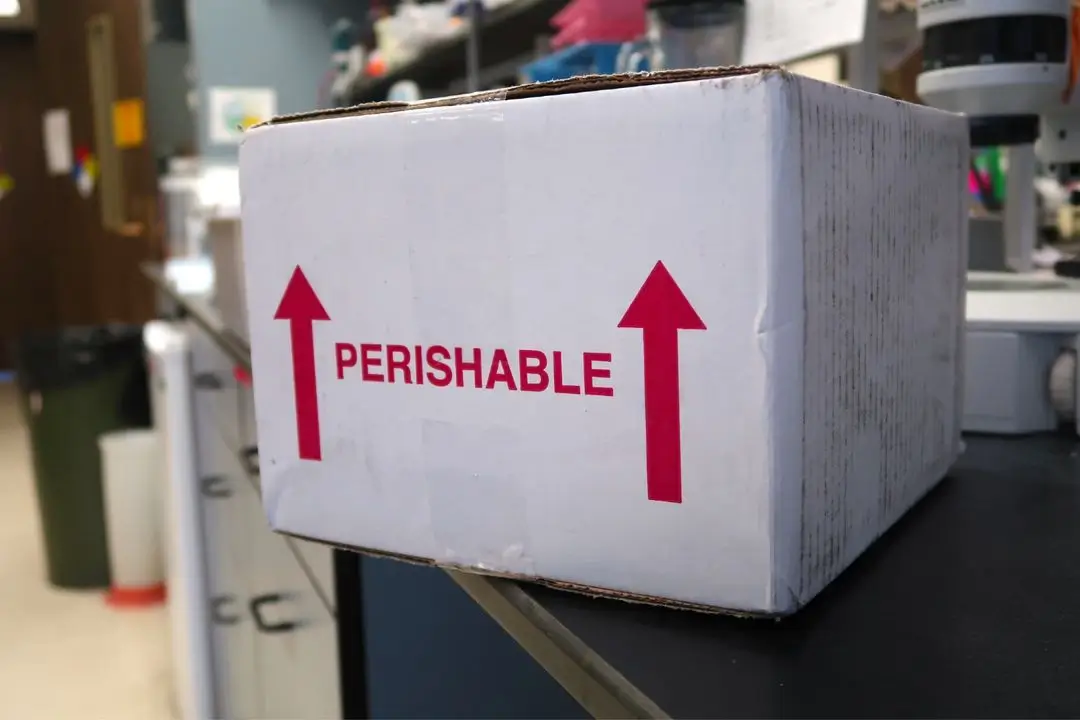
- Label as perishable. Mark the outer box "PERISHABLE — KEEP REFRIGERATED" so handlers and the recipient know to prioritize it.
How many gel packs? The general guideline is 1–2 standard gel packs per pound of product for overnight shipments, and 2–3 per pound for 2-day transit. But this varies based on insulation quality, ambient temperature, and product type. Test your packaging configuration with temperature loggers before committing to it at scale.
When You Still Need Dry Ice
Gel packs are not a universal replacement. There are products and scenarios where dry ice is the only option:
- Frozen products (0°F or below): Frozen meat, frozen seafood, ice cream, frozen prepared meals. Gel packs cannot maintain sub-zero temperatures.
- 3-day transit with no margin: If your product is highly sensitive and transit is 3+ days, dry ice's longer thermal duration may be necessary even for refrigerated items.
- Extreme summer heat: When ambient temperatures exceed 100°F during transit (common in Southwest US during summer), gel packs deplete faster. Some brands add a small amount of dry ice as a backup even for refrigerated products during July–August.
For brands that ship both frozen and refrigerated products, the answer is usually: gel packs for refrigerated, dry ice for frozen. If a customer orders both in the same cart, you need automated order splitting to route each product type into the right packaging — otherwise you're either over-spending on dry ice for refrigerated items or risking spoilage on frozen ones.
For a deeper dive on shipping frozen food specifically, see our guides on FedEx frozen food shipping and UPS frozen food shipping.
Cost Analysis: Switching From Dry Ice to Gel Packs
For a brand shipping 100 refrigerated packages per week, here's the math:
Weekly Coolant Cost Comparison (100 packages, overnight service)
- Dry ice4 lbs/package × $1.10/lb avg$440/week
- Gel packs3 packs/package × $1/pack (amortized, reusable)$300/week
- Weekly savings$140/week ($7,280/year)
That $140/week in direct coolant savings doesn't account for the additional savings from:
- Reduced dimensional weight — gel packs are lighter than equivalent dry ice, which can lower carrier charges
- No hazmat labeling cost — eliminates label materials and the compliance overhead of generating UN 1845 labels
- No compliance risk — zero chance of account suspension from labeling violations
- Simpler training — staff don't need dry ice handling training
The upfront investment is minimal. You need gel packs (which are reusable) and possibly insulated containers if you're not already using them. Most brands recoup the initial investment within the first 2–3 weeks of switching.
Frequently Asked Questions
Can you ship frozen food without dry ice?
Not reliably. Gel packs maintain refrigerated temperatures (32–40°F) but can't sustain the sub-zero environment frozen products require. For truly frozen items — meat, seafood, ice cream — dry ice is still necessary for parcel shipping.
What's the best alternative to dry ice for shipping food?
Gel packs in insulated EPS foam containers. They cost $0.50–$2.00 per pack (reusable), require no hazmat labeling, and maintain 32–40°F for 24–48 hours — long enough for overnight and 2-day shipments of refrigerated products.
How long do gel packs keep food cold?
24–48 hours in standard EPS foam insulation. With premium insulation or vacuum insulated panels, up to 72 hours. Duration depends on insulation quality, number of gel packs, ambient temperature, and how tightly the package is packed.
How much cheaper are gel packs than dry ice?
For a brand shipping 100 refrigerated packages per week, switching from dry ice to gel packs saves approximately $140/week ($7,280/year) in direct coolant costs — plus additional savings from eliminated hazmat labeling and lower package weight.
Do gel packs need hazmat labels?
No. Gel packs are non-toxic, non-hazardous, and require no special labeling or carrier documentation. This eliminates the UN 1845 Class 9 labeling requirement and associated compliance risk that comes with dry ice.
What type of insulated container should I use?
EPS foam coolers are the standard. Use 1.5-inch walls for overnight, 2-inch for 2-day transit. Insulated liners work for less sensitive products. Reflective bubble mailers suit small, lightweight items like chocolates or cheese on overnight service.